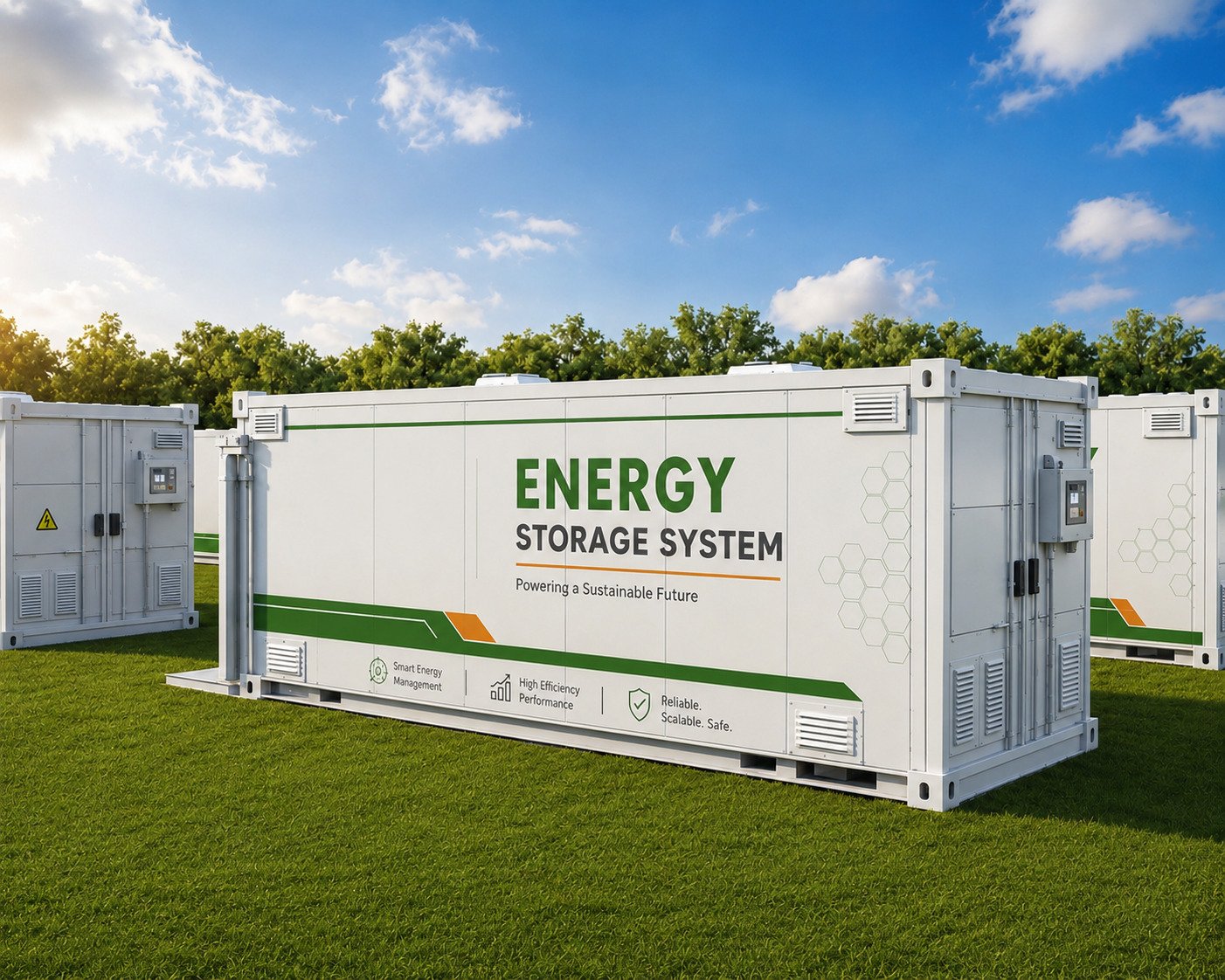

LiFePO4 containerized battery block delivering 5 MWh DC capacity, suited to industrial solar plants, captive solar projects, large factories, renewable-energy developments and commercial campuses with high energy demand.
Rack-mount lithium battery platform with integrated BMS for selected distributed energy-storage, control, IT and auxiliary power applications where compact battery architecture is required.
Cell-level monitoring, balancing and protection, giving solar and energy teams visibility into battery health across high-utilisation industrial and commercial BESS sites.
Dispatch scheduling and peak-shaving intelligence built around solar generation, site demand, tariff windows, battery state of charge and project-specific operating priorities.
Bi-directional power conversion for controlled energy flow between the battery, solar-connected electrical system, grid and site loads, according to the selected BESS architecture.
High-reliability power conversion and battery charging architecture for critical industrial, commercial and renewable-energy applications requiring controlled DC power and dependable operation.
Compact, high-energy-density LiFePO4 battery packs suited to commercial rooftops, smaller factories, campuses and distributed solar sites where installation space is limited.
Fully integrated, liquid-cooled BESS cabinet for mid-size industrial and commercial solar applications that need redundancy without a large plant-room footprint.

A Solar + BESS system coordinates solar PV, power conversion, battery storage and site loads so energy can be stored during suitable charging windows and dispatched according to the chosen operating strategy.
From industrial rooftop solar and captive plants to commercial campuses and developer-led projects, BESS should be designed around the exact use case, solar profile, load curve, grid conditions, safety requirements and project economics.
Store surplus onsite solar and use it later when facility demand is higher, improving utilisation of rooftop, captive or behind-the-meter solar generation.
Discharge the battery during selected short-duration demand peaks to reduce the site peak where tariff structure and load behaviour make peak shaving viable.
Shift solar energy from daytime generation hours into evening, late-shift or other higher-demand periods instead of relying only on instantaneous solar consumption.
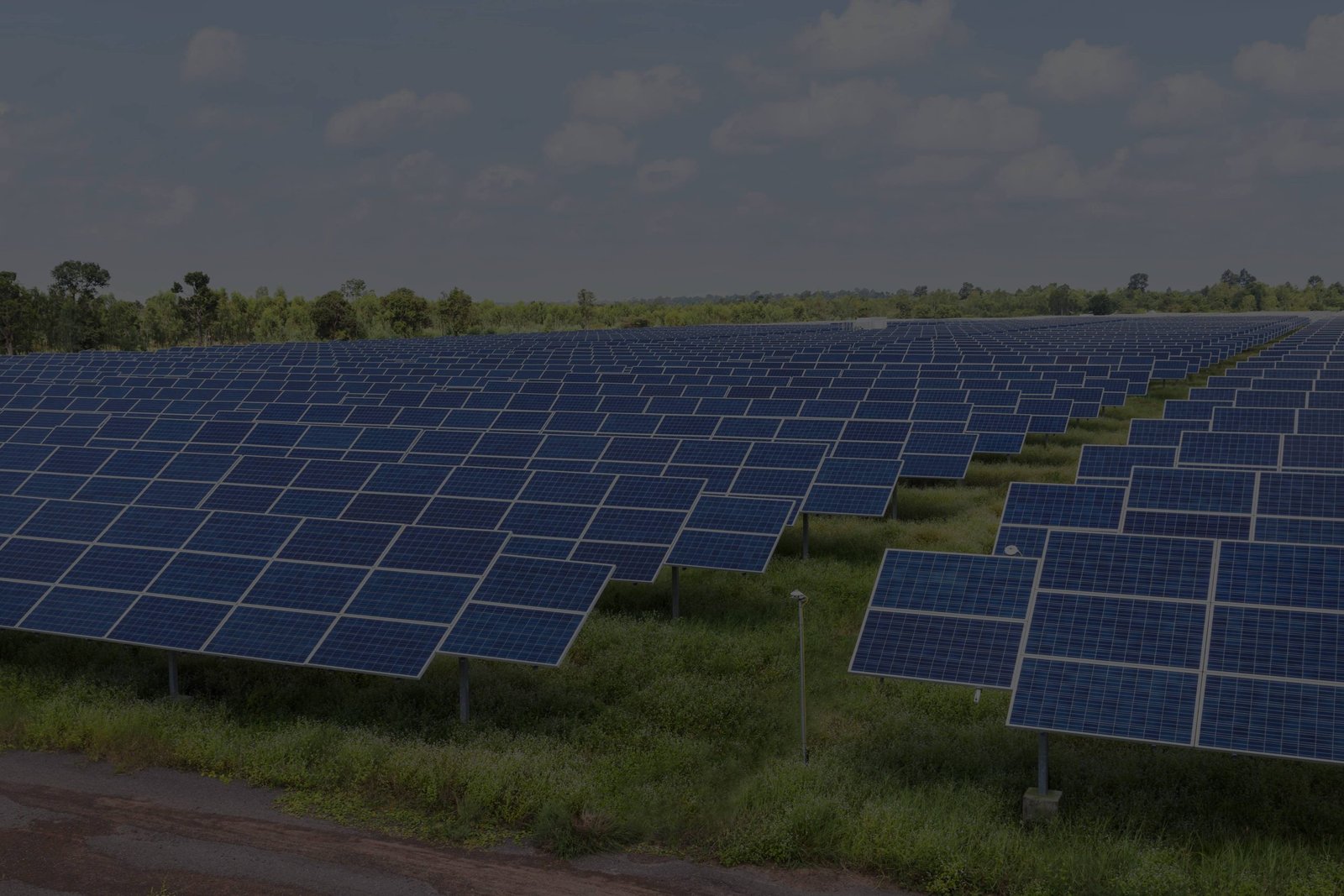
Integrate storage with factory rooftop, ground-mounted or captive solar to support energy management, selected critical loads and higher renewable-energy utilisation.
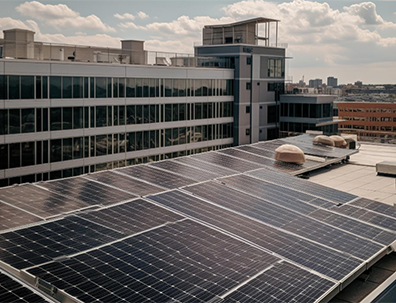
Use storage with commercial rooftops, business parks and campuses for solar self-consumption, HVAC peak management, critical-load reserve and site energy optimisation.
Pair captive solar with BESS to manage mismatch between generation and facility demand, subject to project topology, interconnection and operating requirements.
Technical support for renewable developers and Solar EPC companies covering sizing, PCS and EMS architecture, vendor evaluation, integration and commissioning coordination.
Coordinate solar, battery, grid and site loads through an operating strategy based on state of charge, demand limits, backup reserve and project priorities.
Plan ongoing monitoring, alerts, performance review and maintenance coordination to help sustain BESS availability and operating discipline after commissioning.
There is no one-size-fits-all battery capacity. Every project should be sized from measured load data, solar generation, target use case, grid conditions, required duration, available space, cycling strategy and project economics.
Offices, retail, hospitals, hotels, institutions and commercial buildings with rooftop solar and daytime-to-evening load mismatch.
Business parks, institutional campuses and large commercial sites seeking higher solar utilisation and coordinated peak management.
Manufacturing facilities with rooftop, ground-mounted or captive solar, variable process loads and measurable peak-demand events.
Solar developers and EPC companies evaluating battery integration for energy shifting, dispatch, project requirements or customer-side storage applications.
A site may generate strong solar output at midday but experience its highest demand later. BESS can absorb selected surplus solar and discharge during planned peak or evening windows, depending on battery sizing, operating strategy and tariff economics.
The strongest Solar + BESS projects begin with a clear use case. MSEB Power evaluates how solar generation, battery storage and site demand can work together before recommending system size or architecture.
MSEB Power supports Solar + BESS feasibility, sizing, vendor evaluation and implementation coordination for industrial and commercial solar projects across India. Project suitability is assessed from actual site data, electrical infrastructure and operating objectives.
As industrial and commercial solar adoption grows, more customers are evaluating storage for self-consumption, peak management and resilience. MSEB Power works with regional professionals and project partners to identify suitable Solar + BESS opportunities and coordinate technically sound solutions.
Enquire About Partnership →
A well-integrated monitoring layer can give energy teams visibility into solar generation, battery state of charge, charge and discharge power, site import or export, alarms and operating trends.
Disclaimer: MSEB Power is an independent energy consultancy and project management company. We do not manufacture batteries or solar panels. We help clients evaluate technologies, compare vendors, coordinate with reputed EPC partners, and deliver the most suitable energy-storage solution based on site requirements.